
From Zero to 90% of Global Supply: China's Abalone Farming Revolution
- Easy Seafood

- Jun 23
- 6 min read
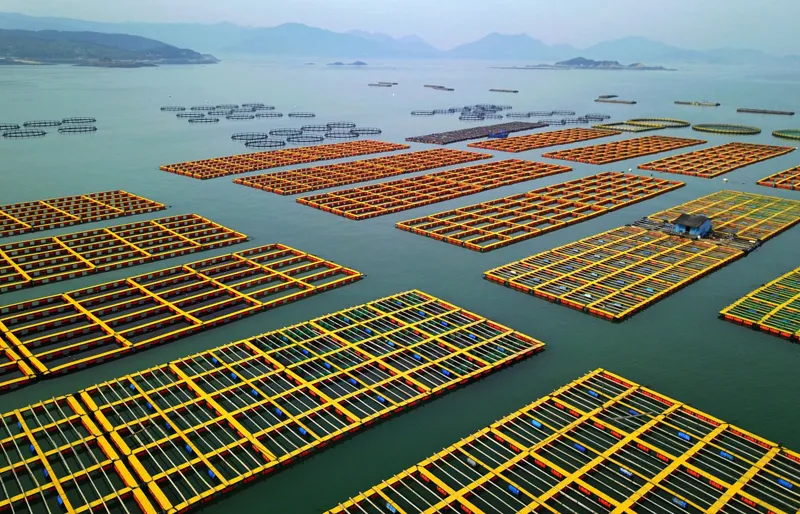
Discover how China built the world's largest abalone farming industry from scratch — from north-south relay farming to breakthrough hybrid breeds like Green Disk Abalone.
How Did China Build the World's Largest Abalone Industry?
A few decades ago, China's abalone farming industry was virtually nonexistent. Today, it accounts for roughly 90% of global abalone production — an extraordinary transformation built on decades of research, innovation, and persistence.
There is a saying in the industry: "World abalone depends on China, China abalone depends on Fujian, and Fujian abalone depends on Lianjiang." The coastal county of Lianjiang in Fujian Province alone produces a staggering share of the world's farmed abalone.
So how did China get here? The answer lies in three key breakthroughs: innovative farming techniques, strategic breeding programs, and a relentless drive to close the quality gap with imported abalone.
The Basics: What Does Abalone Farming Require?
Abalone is one of the most demanding species in marine aquaculture. Two factors make or break a farming operation: water quality and temperature control.
Feed and Shell Color
Abalone are primarily fed silica algae-based aquatic products such as Gracilaria (dragon's beard seaweed), kelp, and purple laver. Farmers choose feed based on market prices and availability. Interestingly, the feed directly affects shell appearance:
Kelp-fed abalone develop green-tinted shells
Gracilaria-fed abalone develop brown shells
Most farmed abalone are fed a mix of both, resulting in the characteristic green-brown mottled shells seen in markets

Water Quality: A Matter of Survival
Farmed abalone require water that has been settled and purified, with salinity held steady at 30‰ (parts per thousand). Temperature must stay within 12–25°C. When summer heat pushes water temperatures higher, salinity levels fluctuate, triggering mass die-offs — the first major challenge every abalone farmer must overcome.
The North-South Relay: A Creative Solution to Temperature
China originally had only two native abalone species farmed at scale:
Southern species: Haliotis diversicolor (variegate abalone)
Northern species: Haliotis discus hannai (wrinkled disk abalone, native to northern waters)
In 2003, southern farmers began importing wrinkled disk abalone from the north. But there was a problem: the average water temperature difference between north and south was about 8°C. Summer heat in the south caused massive mortality rates among the northern-born abalone.
The Solution: Seasonal Migration
Rather than accept the losses, farmers developed a now-famous technique called "north-south relay farming" (北鲍南养):
Late April / early May: Abalone juveniles are transported by live-water boats and trucks to northern waters to "escape the summer heat"
Late November: They are transported back south to overwinter
The following summer, they return north again to complete the growth cycle
A single farming cycle takes two years under this system. The results were dramatic:
Survival rates jumped from roughly 30% to over 80%
The farming cycle was shortened by more than half a year
Southern farmers could avoid typhoon season by relocating stock
Overall farming costs dropped significantly while yields climbed
This north-south relay became a defining feature of China's abalone industry — a creative workaround born from necessity.
Breeding Breakthrough #1: Dongyou No.1 (东优1号)
The north-south relay worked, but it was expensive and logistically complex. The real solution lay in breeding abalone that could tolerate warmer waters.
The Science Behind Dongyou No.1
After eight years of research, the College of Oceanography and Environmental Science at Xiamen University developed "Dongyou No.1" — the first aquatic new variety certified by China's Ministry of Agriculture in 2009, and the first (and only) new aquatic variety bred in Fujian Province at the time.
Dongyou No.1 is a hybrid:
Father line: A high-survival-rate population selected over four generations from abalone imported from Tokyo, Japan
Mother line: A fast-growing population selected over four generations from abalone imported from Taiwan, China
Key Advantages
Parameter | Dong you No.1 |
Suitable temperature range | 10–32°C |
Optimal growth temperature | 22–28°C |
Natural breeding season | June–October |
Breeding optimal temperature | 24–28°C |
Disease resistance improvement | +30% vs. conventional varieties |
The 30% improvement in disease resistance was a game-changer. Under the same farming conditions, Dongyou No.1 simply survived better — and that meant lower costs and higher yields.
Breeding Breakthrough #2: Xipan Abalone (西盘鲍)
If Dongyou No.1 solved the disease problem, the next challenge was heat tolerance. That's where Xipan abalone came in.
Hybrid Origins
Xipan abalone is a cross between two species:
Mother: Haliotis gigantea (Nishii abalone), imported from Nagasaki, Japan, and selected over four generations
Father: Haliotis discus hannai (wrinkled disk abalone) from Dalian, Liaoning Province, also selected over four generations
Physical Characteristics
Xipan abalone shells are medium-sized, sturdy, and oval-shaped, with a small spiral section and large body whorl. The shell surface is typically reddish-brown or bluish-green, with a row of respiratory pores on the left side — the first three open, the rest closed.
The 2.2°C That Changed Everything
Here is the number that matters: Xipan abalone's heat tolerance increased by 2.2°C.
That may sound small, but for abalone, 2.2°C is the difference between life and death. With improved heat resistance, Xipan abalone no longer needed the costly north-south relay — they could stay in southern waters year-round. The savings in transportation, labor, and logistics were enormous.
Together, Dongyou No.1 and Xipan abalone marked a qualitative leap for China's abalone industry. But the biggest breakthrough was still to come.
The Game Changer: Green Disk Abalone (绿盘鲍)
Despite producing 90% of the world's abalone, China faced a stubborn problem: in the premium large-size abalone segment, the market still depended on imports. Chinese abalone sat at the bottom of the global quality pyramid.
The reason was simple biology. China's two native farmed species — Haliotis diversicolor and Haliotis discus hannai — max out at roughly 100g per individual (about "five-head" abalone). For premium products like dried abalone (干鲍), buyers needed much larger specimens, which meant importing from abroad.
Distant Hybridization: Thinking Globally
To break this ceiling, researchers at Xiamen University turned to a technique called distant hybridization — crossing abalone species from different parts of the world. After extensive experimentation with various combinations and optimized fertilization techniques, they succeeded in creating a new champion: Green Disk Abalone.
What Makes Green Disk Abalone Special?
Green Disk Abalone is a hybrid of:
Father: Green abalone (Haliotis fulgens), native to North America
Mother: Wrinkled disk abalone (Haliotis discus hannai), native to China
The results were extraordinary:
Mature individuals reach approximately 500g — the top "one-head" specification
Some farmers have raised individuals exceeding 1,000g
Size surpasses international farmed abalone standards and rivals wild-caught abalone
Farming output doubled; production value tripled
Processing into dried abalone further amplified the value
China could finally reduce its dependence on imported large abalone
Green Disk Abalone didn't just close the quality gap — it redefined what farmed abalone could be.
Fujian: From Zero to the Center of the World
Looking back at the trajectory from the 1990s to today, the story is remarkable. Through continuous selective breeding, improved farming methods, and scientific innovation, both China's and Fujian's abalone production have climbed steeply.
Today, Fujian Province alone accounts for approximately 70% of global abalone production. A region that once had no abalone industry at all is now the world's undisputed center of abalone aquaculture.
For B2B buyers and seafood importers, this means:
Reliable supply: China's abalone industry offers stable, large-volume availability year-round
Multiple Size: From standard five-head abalone to premium one-head Green Disk Abalone, buyers can source across the full specification range
Competitive pricing: Domesticated breeding and optimized farming have driven costs down while quality has risen
Value-added processing: Dried abalone and other premium products are now produced domestically, reducing reliance on imports
Fujian's abalone farmers used ingenuity and hard work to write a new chapter in marine aquaculture. Today, their products don't just serve domestic demand — they're exported worldwide, earning recognition in international markets.
Key Takeaways for Seafood Buyers
China dominates global abalone supply — roughly 90% of world production, with Fujian alone accounting for ~70%
The north-south relay farming technique solved early temperature challenges, boosting survival rates from 30% to 80%+
Three breeding breakthroughs — Dongyou No.1 (disease resistance +30%), Xipan abalone (heat tolerance +2.2°C), and Green Disk Abalone (500g+ individuals) — transformed the industry
Premium large-size abalone is now domestically available, reducing import dependence for dried abalone and other high-end products
For sourcing: Fujian-based suppliers offer the widest range of specifications, the most stable supply, and competitive pricing in the global market.
Published by fzeasyseafood.com — practical sourcing intelligence for frozen seafood importers.

Comments